What the FIFA World Cup taught us about the changing face of sports betting in the United States…

When we booked our trip to the United States for the FIFA World Cup, watching football wasn't the only reason we were going.
As a product experience and research agency specialising in sports betting, we saw it as an opportunity to experience one of the world's fastest-growing betting markets first-hand. Rather than relying on industry reports or dashboards, we wanted to speak to real fans, visit sportsbooks, explore betting products and understand how regulation is shaping customer behaviour on the ground.
Over the course of two weeks we travelled through San Francisco, Boston and Seattle. Three cities connected by the same tournament, but separated by very different betting regulations. Along the way we spoke to supporters before matches, spent time inside retail sportsbooks, tested betting products ourselves and observed how people interacted with them in the moments leading up to kick-off.
We expected to find a sports betting market in the middle of explosive growth, what we actually found was much more complicated.
This isn't intended to be a definitive report on the US betting industry. America is way too large and diverse for that. Instead, these are the observations we came away with after experiencing three very different markets during the biggest sporting event on the planet.
And perhaps the biggest lesson was that there really is no such thing as one "US betting market".
In the UK, customers generally expect the same experience wherever they are. Download an app, verify your account and place a bet. While operators compete fiercely on product, promotions and pricing, the basic customer journey is largely consistent. The experience in the United States feels very different.
In Boston, online sports betting is fully regulated and widely available. Customers can choose from multiple operators, download an app and place bets wherever they are.
San Francisco presents almost the opposite experience. Despite being one of the world's leading technology hubs, online sports betting remains unavailable under California law.
Seattle sits somewhere in between, with sports betting permitted at tribal casinos but without the kind of statewide mobile sportsbook access customers in Massachusetts enjoy.
So, within the space of one trip, we went from a market where betting was available from our phones, to one where online sportsbooks weren't legally available at all, to another where legal betting existed but was tied to specific physical locations.
For the customer, that means crossing a state line can fundamentally change the entire experience; the products change, the availability changes and the rules change. Sometimes, the ability to place a bet disappears altogether.
If the US sports betting industry is going to continue growing, this fragmentation is impossible to ignore. America may be one country, but when it comes to betting, it can feel more like fifty different markets trying to evolve at the same time.
One of the more surprising conversations we had throughout the trip centred around how fans navigate these restrictions.
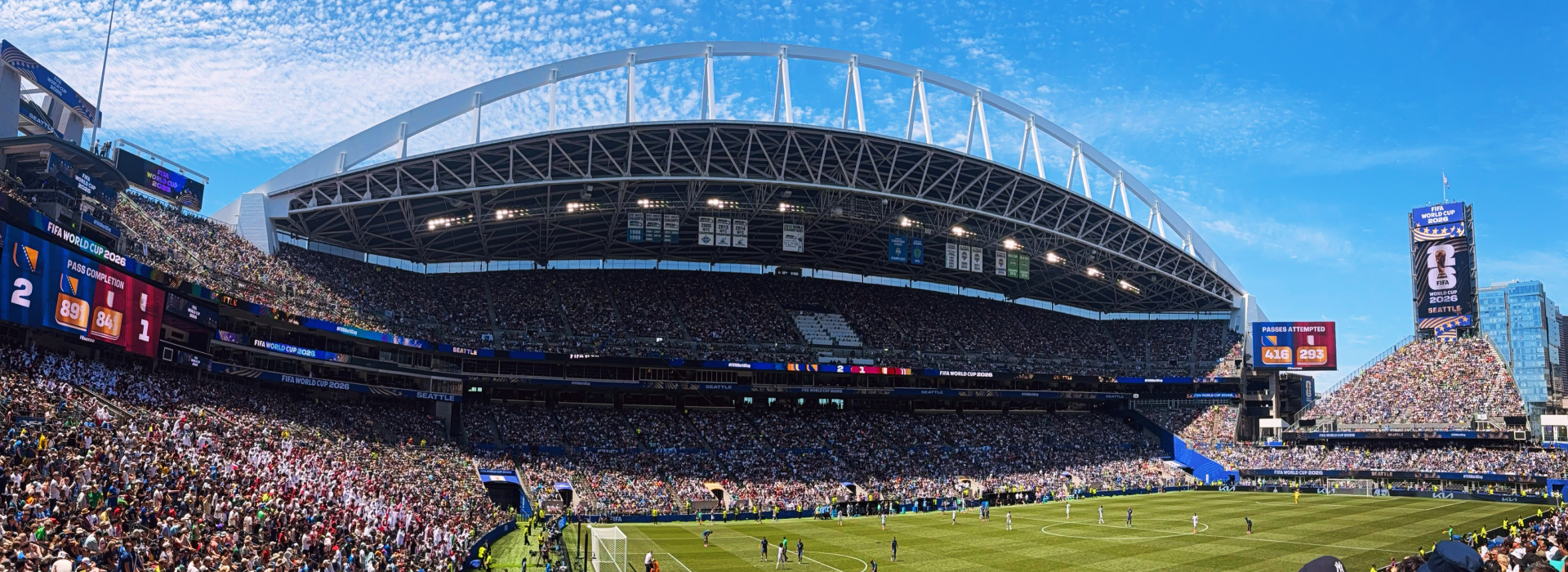
Following the Bosnia v Qatar match at Lumen Field, we discussed with a fan how he navigates the restrictions in Seattle in order to place a bet.
Several supporters openly told us they used VPN services in an attempt to access sportsbooks available in other states, or for travelling fans, the sportsbook they use in their country of origin. Others admitted they had tried before but found the process unreliable or simply gave up after repeated failures.
Naturally, we wanted to understand that experience ourselves…
Using a well-known VPN service, we attempted to access a number of online sportsbooks from states where betting is restricted. While some services initially appeared accessible, others detected our location despite the VPN being active, preventing access altogether. Even when workarounds exist, the experience is inconsistent and far from seamless.
In our experiments, we found we had more success using mobile websites as opposed to native apps. However, whether these customers ultimately succeed or not is almost beside the point. The more interesting observation is that regulation isn't necessarily removing demand, instead, it creates friction for customers who have already decided they want to bet… and therefore must change their behaviour and find workarounds in order to fulfil their needs.
Another theme that came up repeatedly during our trip was the growing visibility of prediction market platforms. While traditional sportsbooks remain focused on odds, markets and increasingly sophisticated betting products, prediction markets offer something quite different. Rather than asking customers to navigate betting terminology or understand complex pricing, many simply reduce the experience to a straightforward question:
Yes. Or No.
For newcomers to sports betting, that's an incredibly powerful proposition.
During the tournament we saw significant visibility for prediction market platforms, including PredictStreet, an official partner of the FIFA World Cup 2026. Beyond the sponsorship itself, several American fans we spoke to told us they preferred these simpler products because they felt easier to understand than traditional sportsbooks. The reduced complexity lowered the barrier to entry, allowing them to participate without first needing to understand betting markets, handicaps or decimal odds.
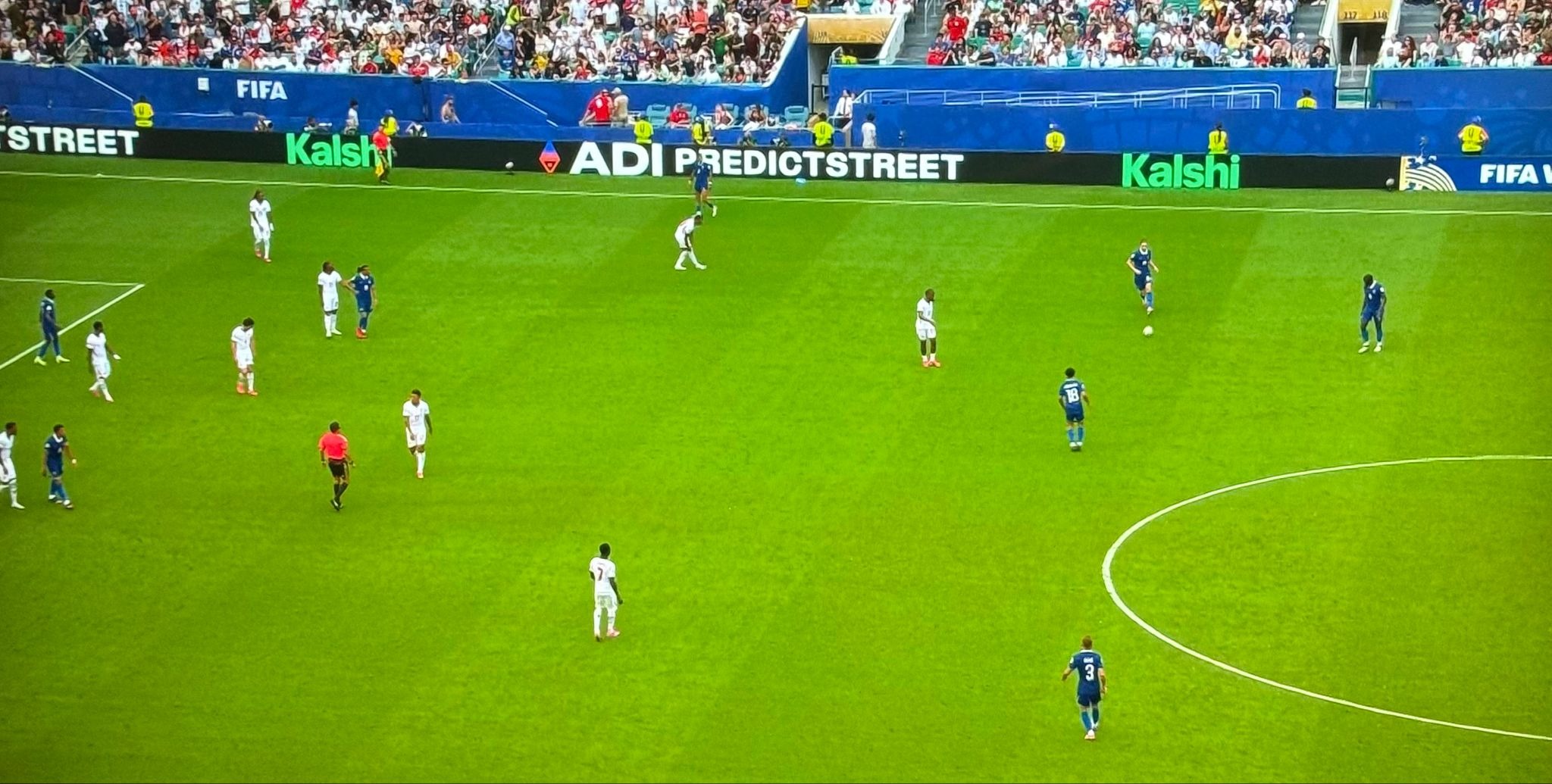
Interestingly, this wasn't just something we heard from consumers. Over the past year we've also spoken with contacts working inside established US sportsbook operators, several of whom highlighted the rapid rise of prediction market platforms such as Kalshi as having a meaningful impact on their market expectations. While traditional sportsbooks continue to compete with one another, many now find themselves competing for the attention of an entirely different type of customer. One who isn't necessarily looking for a betting experience at all, but simply wants an intuitive way to express an opinion on the outcome of an event.
It's also important to recognise that this landscape is far from settled.
Many prediction market platforms currently operate under a different regulatory framework to traditional sportsbooks, and their rapid growth has prompted ongoing debate around where the line between prediction markets and sports betting should ultimately be drawn. As regulators continue to examine the category, the competitive landscape could change significantly over the coming years.
That uncertainty is already influencing investor sentiment. As recently as this week, investor Michael Burry, best known for predicting the 2008 financial crisis, disclosed sizable positions in both Flutter Entertainment and DraftKings. His investment thesis appears to reflect the view that increased regulatory scrutiny could reduce the competitive threat posed by prediction markets and strengthen the position of established sportsbook operators.
Whether that proves correct remains to be seen. Regulation is still evolving, and with it the balance between traditional sportsbooks and this new generation of prediction-based products.
But regardless of what happens next, prediction markets may already have taught the sportsbook industry something valuable: People like simple products.
If someone completely new to betting is presented with hundreds of markets, unfamiliar terminology and complex pricing on one side, and a simple Yes or No question on the other, perhaps we shouldn't be surprised which one feels easier to try first.
One of the highlights of the trip was visiting The Sportsbook at Encore Boston Harbor. From a design perspective, it's an impressive venue. Large-format screens dominate the room, betting terminals are positioned throughout the space and comfortable seating encourages visitors to stay, watch live sport and place bets in an environment that feels far removed from the traditional betting shop we’re accustomed to in the UK.
A visual tour of The Sportsbook @ Encore Boston during a World Cup match, shot with Oakley Meta
It feels premium, it feels exciting and is exactly the kind of destination many European operators have imagined when discussing the future of retail betting; we know because we’ve worked with some of them to help create that vision for retail.
What surprised us wasn't the quality of the venue … it was how quiet it was!
Even during the World Cup, one of the biggest sporting events in the world, the sportsbook was far less busy than we expected. That gave us the opportunity to speak with bettors in a relaxed environment, but it also raised an interesting question.
Are we seeing a shift in the role of the physical sportsbook? And could it catch on in the UK?
For many customers, mobile betting has become the default. Bets are placed on the sofa, in the pub or while walking to the stadium. So, could retail venues instead serve as a more premium “immersive” experience, where punters go to socialise, watch the game and place some bets alongside, rather than the primary place people go to gamble?
It's far too early to draw firm conclusions from one visit, but it certainly challenged some of our assumptions before arriving.
One of the defining conversations surrounding this World Cup wasn't actually about what happened on the pitch - it was about how differently America and the rest of the football world experience the same sport.
There was debate around promotion and relegation versus franchise models; youth academies versus college pathways; the football pyramid versus the draft. Stadium atmospheres. Supporter traditions. Even the age-old question of whether American fans really "get" football.
After spending time with supporters across the country, that last question started to feel like the wrong one. Perhaps it's not about whether one country understands football better than another. Perhaps we're simply looking at two completely different interpretations of the same game. And if the sporting cultures grew up differently, why wouldn't the betting cultures do the same?
Coming from the UK, we expected betting to be woven naturally into conversations before kick-off. Discussions around accumulators, player props and correct scores have become part of matchday culture for many football supporters. For plenty of fans, talking about potential bets sits naturally alongside conversations about team selection, tactics and score predictions. That wasn't something we experienced to the same extent in the United States.
While we certainly met passionate supporters and dedicated bettors, betting itself rarely felt like a defining part of the pre-match conversation. Some fans simply weren't interested. Others lived in states where placing a bet wasn't straightforward enough for it to become habitual. And for many newer US-based football fans, engaging with the sport itself appeared to take precedence over adding another layer of complexity through betting.
In hindsight, perhaps we shouldn't have expected anything else. Football and betting have existed alongside one another in the UK for generations. The relationship, for better or worse, is deeply established.
In the US, both football culture and legal sports betting are still finding their own identities. That doesn't mean American sports fans will eventually start behaving like British bettors… and perhaps that's exactly the point. The opportunity isn't to wait for US customers to adopt European betting habits. It's to understand the habits they're developing for themselves.
If there's one conclusion we kept coming back to throughout the trip, it's that the American market still feels early… and that's exactly what makes it so interesting. The infrastructure is still evolving, regulations are changing and new competitors are emerging. Customers are experimenting with different ways to participate.
Most importantly, millions of potential customers haven't spent decades building the betting habits that exist in more mature markets. They don't necessarily have a favourite sportsbook or understand traditional betting terminology. Most won’t even think of themselves as bettors. That means the opportunity isn't simply about convincing customers to switch from one sportsbook to another. It's about defining what betting looks like for an entirely new generation of users.
Traditional sportsbooks clearly have an enormous role to play in shaping that future, but the rise of prediction markets suggests the winners may not necessarily be the companies offering the greatest number of markets or the most sophisticated features. They may simply be the ones that make participation feel easiest.
At the same time, the fragmentation we experienced across just three states shows why there is unlikely to be a single formula for success. What works in Massachusetts may not work in Washington, while a product that feels intuitive to an experienced NFL bettor may feel completely alien to someone discovering football (or soccer) through the World Cup. Equally, what works in a mature European betting market can't simply be transplanted into the US and expected to deliver the same results.
The scale of the opportunity is enormous because so much is still undecided. Betting habits are still forming, customer expectations are still developing and the market itself continues to take shape. For operators, prediction markets and the wider industry, the battle to define what betting in America eventually looks like may only just be getting started.
We went to America expecting to learn about the US sports betting market, but came back questioning whether such a thing really exists. Across San Francisco, Boston and Seattle, we experienced three completely different versions of betting in the same country. We met fans actively looking for ways around local restrictions, saw prediction markets stripping participation back to a simple Yes or No, stood inside an incredible physical sportsbook during the World Cup and wondered where everybody was, and spoke to football fans whose relationship with betting felt noticeably different from the one we've grown accustomed to in the UK.
None of these observations alone tells us where sports betting in America is heading, but together they paint a picture of a market that is still very much figuring itself out. Regulation will play a huge role in what happens next, as will the ongoing battle between traditional sportsbooks and prediction markets. But perhaps the biggest variable is the customer. For years, the industry conversation has centred around which operator has the best odds, the biggest promotions or the deepest range of markets. For millions of Americans who are relatively new to betting, the bigger differentiator may be something much more fundamental: Can I understand it?
The success of simple prediction products suggests that's a question worth taking seriously. For established sportsbooks, it presents both a challenge and an opportunity. Competition is no longer coming solely from the sportsbook next door, but from entirely different products that are challenging assumptions about what placing a wager needs to look and feel like.
The US isn't one betting market - it's a collection of markets, cultures and behaviours evolving at different speeds… and after travelling across the country during the biggest sporting event in the world, perhaps our biggest takeaway is this:
America still presents one of the biggest opportunities for the sports betting industry, but it’s still deciding what betting looks like.
We would like to extend thank you to those attending the World Cup who had conversations with us and given permission to include their input in this article. All credits are listed where applicable.

Copyright Oxi Group Limited 2026 ©